AI Automotive Diagnostics for Shops: What Owners and Managers Need to Know
By Anthony Calhoun - 25-Year ASE Master Technician, Former Dealership Service Manager, Author of “Why Technicians Are Leaving and How to Keep Them”
AI automotive diagnostics is no longer experimental. Technicians in real shops are using AI-powered tools to cut diagnostic time, reduce comebacks, and flag hours faster. If you manage a service department or own a shop, this affects your bottom line directly.
I spent 15 years as a flat rate diagnostic technician and 7 years managing dealership service departments. I have seen every tool trend come and go. AI diagnostics is different - it actually makes the diagnostic process faster without requiring the technician to change how they work. And for management, the math is simple: faster diagnosis means more cars through the shop.
What AI Automotive Diagnostics Actually Does
When a technician pulls a DTC, the traditional next step is research - manufacturer service information, TSB searches, forum posts, pattern failure databases. That research takes 15 to 30 minutes per code. On flat rate, that is unpaid time.
AI automotive diagnostics compresses that entire research phase into seconds. The technician enters the DTC, year/make/model, mileage, and symptoms. The AI returns a structured diagnostic plan with probable causes ranked by likelihood, relevant TSBs, recommended test sequences, and common misdiagnosis warnings.
For a deeper technical breakdown of how this works, I wrote a comprehensive guide: AI Automotive Diagnostics: How It Works and What Makes It Reliable.
The Business Case: What This Means for Shop Productivity
Let me put real numbers to it. If your diagnostic tech handles 6 diagnostic jobs per day and spends an average of 20 minutes on research per job, that is 2 hours of unpaid research time daily. AI diagnostics cuts that research phase to under 2 minutes per job. That is nearly 2 hours back per day - time your tech can use to flag additional hours.
Over a month, that is 40+ additional productive hours per diagnostic technician. At an effective labor rate of $150/hour, you are looking at $6,000+ in potential recovered revenue per tech, per month. The cost of AI diagnostic tools is a fraction of that.
Reduced Comebacks
One of the biggest hidden costs in any service department is comebacks - vehicles that return because the original diagnosis was wrong. Every comeback costs you a bay, a tech’s time, customer goodwill, and often a rental or loaner.
Purpose-built AI diagnostic tools reduce comebacks by explicitly flagging common misdiagnoses. When the AI tells a technician “P0420 on this vehicle - do not just replace the catalytic converter, check the upstream O2 sensor heater circuit first,” that prevents the most expensive misdiagnosis on that platform. The tool surfaces pattern failure data that would take a technician years to accumulate on their own.
Faster Onboarding for Junior Techs
Every shop struggles with the same problem: experienced techs are retiring faster than new ones are trained. AI diagnostic tools help bridge that gap. A second-year technician with AI assistance can work through diagnostic jobs that would normally require a senior tech’s supervision. The AI provides the pattern failure knowledge and TSB awareness that takes years to accumulate organically.
That does not replace mentorship - junior techs still need experienced technicians to learn from. But it makes the junior tech productive faster, which matters when you are short-staffed.
What to Look for in AI Diagnostic Tools
Not every AI tool is built for automotive shops. Here is what matters from a management perspective:
- Live data access - The tool must search current TSBs and service information, not rely on static training data.
- Vehicle-specific outputs - Generic answers are useless. The tool should tailor results to the exact year, make, model, and engine.
- Structured format - Technicians need scannable diagnostic plans, not paragraphs of text.
- Built by automotive professionals - Tools designed by people who have actually diagnosed vehicles work differently than tools built by pure software engineers.
- Bundled value - The best platforms include diagnostics alongside training, ASE prep, and other tools your techs need.
Platforms like APEX Tech Nation’s AI diagnostic tool were built specifically for this - by a technician who spent 25 years on both sides of the counter. The diagnostic output follows an 8-section format designed around how technicians actually work.
How AI Diagnostics Fits Into Your Existing Workflow
The key to adoption is simplicity. AI diagnostics should not require your techs to change their process. It replaces the research step - nothing else. The tech still pulls codes with their scan tool, still does physical testing, still makes the final diagnostic call. AI handles the information gathering.
For shop management, the implementation is straightforward:
- Give your diagnostic techs access to a purpose-built AI tool.
- Have them use it alongside their normal process for two weeks to build trust in the output.
- Track diagnostic time and comeback rates before and after adoption.
- Expand access to all techs once the diagnostic team validates the tool.
What About Your Customers?
AI diagnostics is not just for technicians. We also built APEX Driver - a car owner app that helps your customers understand what is going on with their vehicle before they even pull into your drive. When customers show up educated instead of confused, the write-up is faster, the approval process is smoother, and your advisors spend less time explaining and more time selling. Educated customers are better customers.
The Retention Angle
Here is something most managers miss: giving your technicians better tools is a retention strategy. I wrote an entire book about why technicians leave - and one of the top reasons is feeling unsupported. When a tech spends unpaid time doing research because the shop will not invest in tools, that is a message. When you provide AI diagnostic access, you are saying “we value your time.”
The shops that invest in their technicians’ efficiency keep their technicians longer. Period. AI diagnostic tools are one of the most cost-effective ways to demonstrate that investment.
For a complete breakdown of how AI automotive diagnostics works and what separates reliable tools from generic chatbots, read the full technical guide on APEX Tech Nation.
The Bottom Line
AI automotive diagnostics is not a future trend - it is a current competitive advantage. The shops using it are diagnosing faster, reducing comebacks, and keeping technicians more productive. The shops ignoring it are leaving money and retention on the table.
If you need help evaluating how AI tools and other retention strategies fit into your service department operations, reach out to A.W.C. Consulting. That is what we do.
From the Author
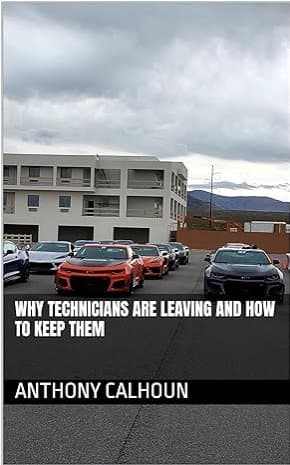
Why Technicians Are Leaving and How to Keep Them
Anthony Calhoun spent 25 years in the bays and behind the service desk. This book breaks down exactly why techs walk - and what shop leaders can do about it. Real stories, real data, no corporate fluff.
Get the book on Amazon →