Build a Career Path for Your Technicians
By Anthony Calhoun - 25-Year ASE Master Technician, Author of “Why Technicians Are Leaving and How to Keep Them”
Every technician in your shop should be able to tell you exactly what they need to do to reach the next level of income and skill. Not in vague terms - in specific terms. Here are the certifications. Here is the training required. Here is what A-tech average earnings look like in this shop. Here is how long the path typically takes. Here is what I am committed to doing as your manager to help you get there.
If your technicians cannot answer those questions, you have a retention problem waiting to happen. A technician with a visible path is investing in a future at your shop. A technician without one is looking for a future somewhere else. I built APEX Tech Nation’s career development resources because too many technicians were navigating this on their own with zero guidance from their shops.
Why Career Paths Matter for Retention
One of the most reliable predictors of whether a technician stays long-term is whether they feel like they are growing. Technical skills plateau without ongoing development. When a technician stops learning, they start evaluating their options. And in a market where the industry needs 76,000 new technicians annually and only 39,000 are graduating, every technician who walks is one you probably cannot replace.
Growth investment is a core component of the retention formula I lay out in my book. Earned respect, protecting time, honest expectations, genuine belonging - all of it matters. But if a technician feels stuck, the rest of the formula loses its hold. People do not stay where they cannot see a future.
Set Honest Expectations From the Start
The most important career conversation happens before the technician starts. In the interview, lay out what the first six to eighteen months actually look like. Not a pitch. Not a best-case scenario. The honest truth.
Flat rate takes time to master. Nobody flags 50 hours in their first month. Proficiency builds through training, mentorship, experience, and repetition. Tell them what a realistic ramp-up trajectory looks like in your shop, what support you will provide along the way, and what milestones to aim for. Make it visual if possible - a simple chart showing B-tech progression to A-tech earnings with realistic timelines.
When you tell a technician with very low training and experience that they might be in for two years of hard learning on a training program, the outcome is completely different than telling them they will easily turn 50 hours a week. If they take the job knowing what to expect, they do not walk in and find themselves unable to pay their bills on a 20-hour week. Honesty up front prevents the departure at month three.
The Tool Investment Conversation
Too many young technicians start a new job and immediately go into debt on a new toolbox and tools because a truck showed up the first week and they felt pressure to look established. The monthly payments then exceed what they are making during ramp-up, stress compounds, and they start looking for the exit.
Have this conversation proactively. Tell them: start with what you need to do the work assigned to you right now. Buy smart - the internet and competition have changed tool access dramatically, and the truck is not the only or best option for most purchases. Grow the investment as your income grows. A technician who is not drowning in tool debt in their first year has the financial breathing room to stay focused on developing their skills. For more on the full onboarding picture, read how to reduce technician turnover.
Compensation Transparency
One of the fastest ways to lose a strong candidate or a developing technician is ambiguity around compensation. Be prepared to have a specific, honest conversation about what a technician at each level realistically earns in your shop - not what the top earner had one exceptional month, but what a consistent B-tech and A-tech average week over week, month over month.
If your pay plan has weaknesses, acknowledge them and explain what the shop offers to offset them. Strong technicians are evaluating your entire offer - pay plan, workflow quality, management respect, training investment, and career trajectory. If you are strong in areas beyond pay, lead with that. But do not obscure the pay picture, because it will surface anyway and you will have lost trust in the process.
Build the Ladder and Make It Visible
Put the career path on paper. Make it real. Here is what it should include at minimum:
- Skill levels clearly defined: What separates a C-tech from a B-tech from an A-tech from a master tech in your shop? What certifications are required at each level? Show them what the ASE Master Technician career path actually looks like.
- Earnings at each level: Realistic averages, not peak months. What does a consistent B-tech take home? What does an A-tech average? Be specific.
- Training requirements: Which manufacturer courses, which ASE certifications, which in-shop benchmarks need to be hit for advancement?
- Timeline: How long does the path typically take? Not a guarantee - a realistic range based on what you have seen.
- Manager commitment: What specifically will you do to help them get there? Training access, mentorship pairing, work assignments that build their skills?
When technicians can see the path, they stay on it. Give them access to free training for your techs so they can work on their development outside of shop hours too.
Mentorship Drives the Path Forward
Pair developing technicians with senior techs who are willing and capable of mentoring. The senior technician benefits too - teaching reinforces knowledge, and being recognized as someone worth learning from is a form of professional respect that experienced technicians rarely receive. It is also a retention tool for your senior people.
I started at 18 as a vocational student and advanced through the GM ASEP program. Every stage of my development involved someone more experienced who took the time. That is not something you can replace with an online module. Real mentorship accelerates growth in ways that no other training method can match.
Beyond the Wrench
Not every technician wants to turn wrenches for 30 years, and that is fine. Some want to move into shop foreman roles, training positions, or management. If your shop has those paths available, make them known. If a technician tells you they are interested in leadership, invest in that development instead of waiting until they leave to pursue it somewhere else.
The technician in me always wants to find and fix the root cause. When technicians leave because they do not see a future, the root cause is almost always that nobody showed them one. That is fixable. And it costs almost nothing compared to what an empty bay costs you - over $600,000 a year in lost revenue.
If you want help building career path systems in your shop, that is exactly what I do. Connect with me through ASE certification training or reach out directly. Let’s talk.
About the Author
Anthony Calhoun is a 25-year automotive industry veteran, ASE Master Technician, and author of “Why Technicians Are Leaving and How to Keep Them.” He is still in the bays turning wrenches in 2026 while running AWC Consulting LLC, helping Fixed Ops leaders recruit, train, and retain the technicians who drive their profitability. For consulting inquiries, reach out at AWC@awcconsultingservices.com.
From the Author
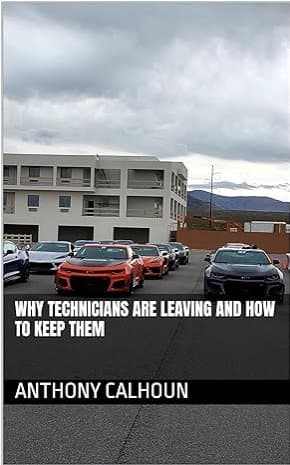
Why Technicians Are Leaving and How to Keep Them
Anthony Calhoun spent 25 years in the bays and behind the service desk. This book breaks down exactly why techs walk - and what shop leaders can do about it. Real stories, real data, no corporate fluff.
Get the book on Amazon →