
When a Technician Makes a Mistake: Build a Shop Where They Own Up
By Anthony Calhoun, 25-Year ASE Master Technician, Former Dealership Service Manager, Author of “Why Technicians Are Leaving and How to Keep Them”
Every technician makes mistakes. Every one. The highly trained ones make fewer, but nobody makes zero. So the question for a service manager or shop owner is not whether a mistake will happen in your shop. It is whether you will hear about it in the bay, or from the customer in your driveway.
That answer is decided long before the mistake. It is decided by how your shop treated the last person who came forward.
Two Drained Transmissions, Two Outcomes
On a recent episode of our podcast, Craig Tomczyk and I had Marcus Swaney on as a guest. Marcus has been a technician for almost 17 years, and he now recruits, trains and retains technicians for a dealer group in Delaware. We covered a customer’s video about an oil change at a Ford dealer. Her vehicle came back with a transmission problem and a quote of around $15,000.
We were not there, so this is only our opinion. But all three of us thought it looked like the classic mistake. Somebody drained the transmission instead of the engine oil, then put a full load of oil into an engine that still had its old oil in it. Craig did not hold back:
“They screwed up. They owe her a transmission. It’s 100% on them.”
Marcus has seen it many times. He started at Subaru, and they used to get cars from quick lube shops with exactly this problem. On the older Subarus, the engine is shorter, and the transmission drain plug sits right behind the engine’s. I see the same kind of thing on the Duramax. New technicians take the external transmission filter off thinking it is the oil filter. It is almost a guarantee if nobody shows them first.
Then Marcus told a different version of the same story. A new technician drained a transmission by mistake. He saw the color was wrong, and he came to get Marcus. They fixed it, told the customer the truth, and gave the customer a free transmission service. That is how you handle it.
Same mistake. One ended with a customer posting a video about a huge transmission quote. The other ended with a customer getting a free service and a straight answer. The difference was not skill. It was that the new technician felt safe walking over and saying, I think I messed up. You can read the whole discussion in the Shop Floor Report from that episode.
Craig, Marcus and I talked through both of these on episode 23 of the APEX Tech Nation podcast:
Why Lying Makes Everything Worse
Here is what I told technicians on the show, and what I would tell yours. If you make that mistake, own up to it. Your manager is doing their best to believe you. If you lie about it, you make it harder for the manager, harder on yourself, and harder to do right by the customer. And it does not change the outcome. The shop that did the work still owns the repair.
As a manager, I can fix almost any mistake I hear about in time. I cannot fix one I find out about from a customer’s video. A drained transmission caught in the bay is a refill and an honest phone call. A drained transmission that leaves the lot can turn into a damaged transmission, a lost customer, and a story you do not want told about your shop.
But here is the part for us on the management side. Technicians do not hide mistakes because they are bad people. They hide them because they have watched what happened to the last person who admitted one. If the answer in your shop is a public chewing out, a write up for an honest mistake, or a manager who throws the technician under the bus in front of the customer, you have trained your people to hide things. That is on us, not on them.
Build No Blame Reporting Into the Shop
No blame does not mean no accountability. It means the first conversation is about fixing the car, not about punishing the person. Here is what I recommend:
- Make the rule simple and say it out loud. If something looks wrong, stop and get a lead technician or a manager. Nobody gets in trouble for a dumb question, and nobody gets in trouble for stopping a job that does not look right.
- Reward the report. When a technician comes forward fast, thank them in front of the team. Speed is what saved the customer’s transmission in Marcus’s story.
- Separate the honest mistake from the pattern. One drained transmission is a training problem. The same mistake over and over, or a cover up, is a different conversation. Handle that one in private.
- Look at the system, not just the person. When something goes wrong, ask what made it easy to get wrong. I made this point on the show: when the express lane is out of sight of the main shop, nobody experienced walks by and says, wait, that does not look right. Layout matters. Craig added that boredom matters too. A lot of new technicians start on the lube rack doing oil changes all day after a tech school told them they would be doing real work.
How the Advisor Tells the Customer
The worst version of this is silence. When a Hellcat Jailbreak got wrecked during an oil change at a Dodge dealer, the owner says he sat in the dealership for roughly six hours before he found out something had gone wrong. If you are six hours into an oil change, somebody knew something was wrong hours ago.
Marcus said it right. Be up front with the customer: we had an accident, it is not good, and it is going to take a while to figure out. That is the whole script. For the advisor making that call, I would add a few things:
- Call fast. Bad news gets worse every hour you sit on it. The customer will remember how long you waited longer than they remember the mistake.
- Say what happened in plain words. No jargon, no hiding behind “an issue came up.” Tell them what happened, what you are doing about it, and when they will hear from you next.
- Do not hang it on the technician. The customer is dealing with the shop, not with one person in a bay. When I was a manager, I told customers that if we messed it up, we would make it right. I always went to my technicians’ defense first. Your technicians notice which managers have their back.
- Get the manager involved. The advisor should not be negotiating a fix alone. Have the manager on the call or right behind it.
Making It Right
Craig’s line about the Ford dealer is the standard: it is 100% on them. The shop that did the work is responsible for making it right. Marcus’s shop did exactly that, and threw in a free transmission service on top of the fix.
Even when it goes badly, making it right still counts. In the Hellcat story, the owner says someone very high up in the company contacted him, and the dealership group apologized and got involved with the insurance companies. In the update we read on the show, he said he was given an offer he is happy with, and he feels like he could come back as a customer someday. That is a customer who had his car wrecked during an oil change and still left the door open. That is what owning it can do.
Train New Technicians So Mistakes Get Caught in the Bay
The best way to handle a mistake is to catch it before the car leaves. That comes down to training. Show every new technician where the drain plugs are on the vehicles you see most. If you work on Duramax trucks, show them the external transmission filter that new technicians mistake for the oil filter. Pair them with a senior technician who is willing to teach, and check in with them at 30, 60 and 90 days with a real conversation, not a performance review. I wrote more about that in mentoring new technicians in your shop and the first 90 days of onboarding.
Marcus had good advice for young technicians:
“Don’t be afraid to dive into any challenge. Always say yes to a job and ask questions. [The] older senior techs, they’re always gonna support ya. Some of [them] are grumpy and mean about it, but they’re gonna help you regardless. I promise you.”
I agree. We can seem like a grumpy group sometimes, but nobody wants to watch a new technician struggle. Your job as a manager is to make sure your senior people actually do help, and that the new technician knows asking is expected. If your newer people need a starting point, point them to this guide on finding a mentor and being one. And if they are the ones making the customer call, this one on communicating with customers is worth a read.
Marcus and I talked about this before the show. If you have a retention problem, you do not really have a shortage problem. Shops that train and support their technicians keep them, and the mistakes get caught in the bay. A technician who knows the shop has their back when they own up is a technician who stays.
The Bottom Line
You cannot build a shop with zero mistakes. You can build a shop where mistakes come to you fast, get fixed honestly, and turn into training instead of lawsuits and videos. That starts with how you react the next time a technician walks into your office and says, I messed up.
If you want to talk through how your shop handles mistakes, comebacks or customer calls, I am glad to compare notes. Reach out to A.W.C. Consulting and tell me what you are seeing.
About the Author
Anthony Calhoun is a 25-year automotive industry veteran, ASE Master Technician, and author of “Why Technicians Are Leaving and How to Keep Them.” He spent about 18 years as a working technician and about 7 managing dealership service departments, and he runs AWC Consulting LLC, helping Fixed Ops leaders recruit, train, and retain the technicians who drive their profitability. For consulting inquiries, reach out at AWC@awcconsultingservices.com.
From the Author
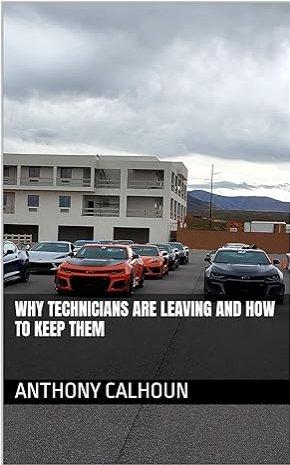
Why Technicians Are Leaving and How to Keep Them
Anthony Calhoun spent 25 years in the bays and behind the service desk. This book breaks down exactly why techs walk - and what shop leaders can do about it. Real stories, real data, no corporate fluff.
As an Amazon Associate I earn from qualifying purchases. Details