Service Advisor vs Technician Conflict: Fix the Friction
By Anthony Calhoun - 25-Year ASE Master Technician, Author of “Why Technicians Are Leaving and How to Keep Them”
The people at the desk hold enormous power over a technician’s day. The difference between a time waster and a time saver is measurable in flagged hours, comeback rates, and ultimately in whether technicians want to stay in your shop. I have been on both sides of this - 18 years as a flat-rate technician counting every tenth, and 7 years as a manager watching the friction between desk and bays cost shops real money every single day.
The conflict between service advisors and technicians is not about personality. It is about a fundamental mismatch in how each side measures a day. Managers and advisors count hours sold, effective labor rate, and CSI scores. Technicians count tenths of an hour - literally six minutes at a time - because their income depends on it. One side sees spreadsheets. The other sees a high-pressure environment where speed, accuracy, and quality must coexist under constant time scrutiny. Closing that gap is one of the reasons I built APEX Tech Nation - a community where technicians can support each other through the challenges that most shops do not address.
Where the Friction Lives
The conflict between advisors and technicians almost always comes down to the same handful of pain points: jobs dropped mid-flow, vague ROs that force the tech to diagnose the paperwork before the vehicle, slow approvals that leave a flat rate technician standing around unpaid, and status check interruptions that break concentration without adding value.
Each of those has a fix. Smart dispatching. Complete ROs with real symptoms and customer concerns. Fast approvals - pre-authorized up to a reasonable threshold. And one question every morning instead of ten interruptions throughout the day: “What does your day look like, and what do you need from me?”
I break down every time waster and its corresponding fix in my piece on protecting technician time on flat rate. If you manage advisors, that piece should be required reading for your entire front counter.
The Cumulative Cost of Friction
No single interruption seems like a big deal from the desk. But from the bay, every broken workflow compounds. A technician who gets pulled off a job, waits for an approval, and then gets a vague RO has just lost three separate chunks of productive time - and the mental cost of restarting each time is real. I wrote about this in detail in my piece on how dispatching affects technician productivity.
The advisors who understand this protect the technician’s rhythm. The ones who do not create friction that shows up in flagged hours, morale, and eventually in resignation letters. For more on what drives technicians to leave, read why technicians leave.
Bridge the Gap With Understanding
You do not need to be a master technician to lead a service department effectively. But if you cannot open a hood and point out basic components, cannot check fluid levels, or do not know the difference between a radiator and an alternator - technicians will notice, and it will cost you credibility.
Take manufacturer training when it is available. Ask technicians to teach you things. That last one is particularly powerful. Going into the bay and saying “can you walk me through what this is?” does two things simultaneously: it helps you learn, and it signals to the technician that you value their expertise. That signal is not small.
Every manager I have suggested this to has immediately had an excuse. I do not have time. That is what I have techs for. But you are being asked to hire, develop, and retain these people. How do you manage what you do not understand? The managers who take the time to learn earn a different level of respect - and they make better decisions because of it. Investing in automotive training for technicians benefits advisors and managers who want to understand the work better too.
And the same principle applies on the customer side. When car owners understand what is happening with their vehicle, the approval process gets faster and the advisor’s job gets easier. That is why we built APEX Driver - a plain-English car education app that helps customers show up informed instead of suspicious.
The Conflict Is Fixable
The friction between desk and bays is not inevitable. It is the result of systems, habits, and a context gap that can be closed. Advisors who understand flat rate - who have spent even one day shadowing a technician - make fundamentally different decisions than advisors who have never left the write-up desk.
Fix the repair orders. Fix the dispatching. Fix the approval process. Teach your advisors what a flat-rate day feels like. The friction will drop, flagged hours will climb, and your technicians will stop looking at job boards during lunch. For a complete framework on reducing turnover, read how to reduce technician turnover.
If you want help fixing the desk-to-bay relationship in your shop, see how we help shops build better workflow. Let’s talk.
About the Author
Anthony Calhoun is a 25-year automotive industry veteran, ASE Master Technician, and author of “Why Technicians Are Leaving and How to Keep Them.” He is still in the bays turning wrenches in 2026 while running AWC Consulting LLC, helping Fixed Ops leaders recruit, train, and retain the technicians who drive their profitability. For consulting inquiries, reach out at AWC@awcconsultingservices.com.
From the Author
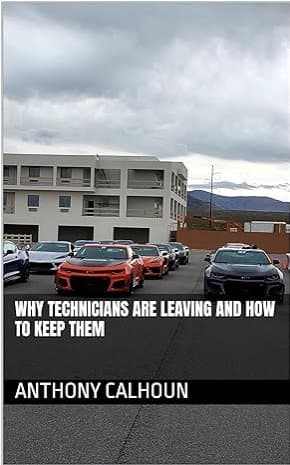
Why Technicians Are Leaving and How to Keep Them
Anthony Calhoun spent 25 years in the bays and behind the service desk. This book breaks down exactly why techs walk - and what shop leaders can do about it. Real stories, real data, no corporate fluff.
Get the book on Amazon →