The Automotive Technician Shortage Is Real
By Anthony Calhoun - 25-Year ASE Master Technician, Author of “Why Technicians Are Leaving and How to Keep Them”
Let me ask you a direct question before we get into the numbers. How many technicians could your shop use right now? What has your turnover rate been over the last three years? If you could have kept every strong technician who ever walked through your service department and developed them into their full potential, how different would your shop look today?
Most Fixed Ops leaders sit with those questions for a moment and then feel the weight of what they have left on the table. Because the math is brutal when you actually look at it. And the shortage is not slowing down - which is exactly why I built a diagnostic and training platform built for techs to help close this gap from the technician side.
The Hard Numbers
According to the National Automobile Dealers Association’s 2025 Workforce Study, the automotive industry needs to replace or add approximately 76,000 technicians each year to account for retirements, growth, and turnover. Yet only about 39,000 new technicians graduate from career technical colleges and training programs annually. That leaves an annual shortfall of roughly 37,000 trained technicians - a gap projected to reach 642,000 or even 1 million unfilled roles across automotive, diesel, and collision by mid-decade.
Overall dealership turnover sits at approximately 42 percent as of 2025, a three-year high, with non-luxury brands reaching as high as 45 percent. And roughly 68 percent of technicians are detractors - meaning they would not recommend this field to anyone. That number alone should tell you the depth of the problem.
What an Empty Bay Actually Costs You
An empty bay is not just a quiet corner of the shop. It is a silent profit killer. One unoccupied bay costs your dealership over $600,000 per year in combined parts and labor revenue. If you are running three vacant bays - which is common - that is a $1.8 million annual problem sitting in your shop right now.
In a high-volume dealership, an unoccupied bay costs $1,500 to $2,000 in lost gross revenue per day. At a labor rate of $150 to $175 per hour, a productive technician flagging 45 hours per week generates approximately $7,875 in labor revenue weekly. Over a standard 50-week year, that is $393,750 in lost labor revenue per vacant bay before you touch parts.
Parts gross compounds this significantly. Industry benchmarks place the parts-to-labor ratio at roughly 1:1. At a 40 percent parts gross margin, you add another $157,500 in lost gross profit. Factor in recruiting costs and the revenue gap during a 6 to 12 month ramp-up period - replacing one technician conservatively costs $50,000 to $90,000 total - and the annual impact of a single vacant position is staggering.
The Cascade Effect
An empty bay does not just reduce capacity. It creates a cascade. Remaining technicians get stretched thin, quality suffers, comebacks rise, CSI scores drop, and manufacturer incentives are at risk. Customers who wait too long go to independents and often do not come back. Research consistently shows that customers who service at the dealership are substantially more likely to purchase their next vehicle there - that loyalty pipeline runs directly through your service department.
Fixed operations generated over $156 billion industry-wide in 2025, accounting for roughly 13 percent of total dealership revenue but approximately 49 percent of gross profit. In many dealerships, fixed ops drives 85 to 90 percent of net profit. When you are short on technicians, you are not just losing capacity - you are undermining the most profitable part of your business.
Stop Recruiting and Start Retaining
Here is the part most people get wrong. The answer to the shortage is not more recruiting. It is less turnover. Dealerships running 42 percent annual turnover with even a modest technical staff are routinely spending $200,000 to $500,000 per year simply replacing people they already had. That is money spent running in place.
The shortage is not happening to you. In most cases, it is being created by systems, cultures, and leadership patterns that can be changed. The technician in me always wants to find and fix the root cause. That is what this is about. For a deeper look at what actually drives technicians out, read my piece on why technicians quit.
Grow Your Own Pipeline
The best technicians in your market are not looking for work. They are locked in at a shop that treats them right. If your entire strategy is job postings, you are only reaching people who are already unhappy somewhere else - and those hires bring baggage.
The real play is building a pipeline before you need it. Vocational schools, manufacturer training programs, community colleges, parts vendors who know every shop in town. Build relationships now so that when a bay opens, you already have candidates. I go deep on this in my complete recruiting guide. And give the young technicians coming up access to automotive training for technicians - it accelerates their development and shows them you are serious about their future.
Your Reputation Is Your Recruiting Strategy
Technicians talk. They talk at the parts counter, at training events, at car shows, over social media. The reputation your shop has among technicians in your market is the single most powerful recruiting asset or liability you possess. If your shop is known for protecting technician time, paying fairly, and having management that respects the bays, you will have technicians reaching out to you. If your shop is known for the opposite, no recruiting spend will overcome it.
This is why everything connects. The way you treat the technicians you already have determines your ability to attract the ones you need. For a complete retention framework, read how to retain automotive technicians.
Write Job Postings That Tell the Truth
Most automotive job postings read identically. Competitive pay. Great benefits. Professional environment. Advancement opportunities. Technicians have read a thousand of these and believe almost none of them because so few have matched reality.
Write a posting that is honest and specific. Tell them exactly what the pay plan looks like and what top earners in your shop actually make. Tell them what your workflow looks like, and what you do specifically to protect their time. Be specific about tools policy, warranty time handling, and dispatching philosophy. Specificity builds credibility. Vague promises build nothing.
The Fix Starts Tomorrow
The shortage is real. The costs are real. But the fixes are real too. None of this requires a budget approval or a new system. It requires a decision - made today, acted on tomorrow - to lead differently. Start with retention. Fix the culture. Protect the time. Grow your own pipeline. The technicians you keep today are the foundation of the shop you are building for the next decade.
If you want help building these systems in your shop, that is exactly what we do. Let’s talk.
About the Author
Anthony Calhoun is a 25-year automotive industry veteran, ASE Master Technician, and author of “Why Technicians Are Leaving and How to Keep Them.” He is still in the bays turning wrenches in 2026 while running AWC Consulting LLC, helping Fixed Ops leaders recruit, train, and retain the technicians who drive their profitability. For consulting inquiries, reach out at AWC@awcconsultingservices.com.
From the Author
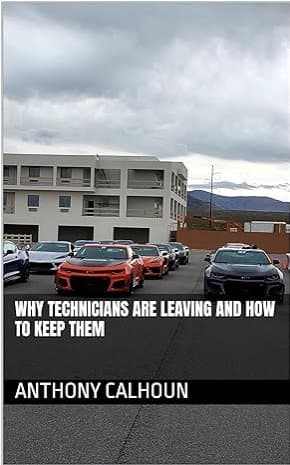
Why Technicians Are Leaving and How to Keep Them
Anthony Calhoun spent 25 years in the bays and behind the service desk. This book breaks down exactly why techs walk - and what shop leaders can do about it. Real stories, real data, no corporate fluff.
Get the book on Amazon →