How to Train Automotive Technicians
By Anthony Calhoun - 25-Year ASE Master Technician, Author of “Why Technicians Are Leaving and How to Keep Them”
One of the most reliable predictors of whether a technician stays at a dealership long-term is whether they feel like they are growing. Technical skills plateau without ongoing training. When a technician stops learning, they start evaluating their options. Training is not a cost. It is a retention strategy with a direct return on investment that shows up in flagged hours, diagnostic accuracy, comeback rates, and tenure.
I started my career in 2001 at age 18 as a high school vocational student, advancing through the GM ASEP program while earning two associate degrees. Every skill I developed came from a combination of structured programs and real mentorship from experienced technicians who took the time. That combination is what works. And it is what most shops are missing. Platforms like APEX Tech Nation’s training library exist to fill the gaps that most shops leave open.
Manufacturer Training: Use Every Opportunity
Every manufacturer provides training resources, and most dealerships underutilize them. Send your technicians to classes. Pay for ASE recertification. Point them toward a solid ASE certification guide so they understand the full process and what each test covers. Invest in the diagnostic tools and software updates that make advanced training actionable. When a technician sees that the dealership is investing in their skills, they are not just more capable - they are more committed.
There is also a competitive angle here. Electric vehicles, ADAS systems, and increasingly complex vehicle architectures are changing what a competent technician needs to know. The shops that invest in EV and advanced diagnostic training now are building a capability advantage that will separate leaders from followers in the next five years. The shops that wait will be scrambling.
In-Shop Learning and Knowledge Transfer
Not all training happens in a classroom. The best shops have a culture of continuous knowledge sharing. Senior technicians who solve a particularly difficult diagnostic write it up and share it. Managers circulate technical service bulletins and make sure the team understands what is coming. Time is made, even briefly, for technicians to teach each other. Most will do this without any formal meeting.
When you create an environment where knowledge flows freely and sharing expertise is recognized and valued, you raise the floor for the whole shop. Your weaker technicians get better faster. Your stronger technicians feel valued for something beyond their flagged hours. And the shop develops a collective intelligence that individual training alone cannot build.
Mentorship That Actually Works
Pair every new technician with a senior tech who is willing and capable of mentoring. This is not a formal program with binders and checklists - it is a genuine relationship where a new hire can ask questions, watch how a strong technician approaches diagnostics, and get real-time guidance on shop systems and workflow.
Do not expect the senior tech to take a pay cut if the new hire slows them down. Some senior technicians can use the new person as an assistant to handle the time-consuming tasks while they learn the ropes. Others might work differently. Every plan and person will be a little different. The key is being intentional about it instead of pointing a new hire at a bay and letting them figure out the social landscape on their own.
The senior technician benefits too. Teaching reinforces knowledge, and being recognized as someone worth learning from is a form of professional respect that many experienced technicians rarely receive. It is also a retention tool for your senior people. For more on keeping your experienced technicians engaged, read how to retain automotive technicians.
Grow Your Own Pipeline
Training and recruiting are connected. The technicians of the next decade are in classrooms right now, and the shops that build relationships with those programs today will have first pick of the best graduates tomorrow. Sponsor a tool set for an outstanding student. Send your master technicians to do presentations. Offer job shadows. Hire interns who are willing to learn.
I go deep on how to build this pipeline - including how I developed young technicians through the GM ASEP program - in my complete recruiting guide. The combination of a strong apprentice pipeline and selective experienced hiring creates a shop that is never fully dependent on the external market for talent.
The Reading Comprehension Question
One thing I always ask in interviews, and when I say this I get a weird look: how is your reading comprehension? It matters much more than most people realize. If you cannot read and understand how something works, it is going to be more difficult to diagnose and repair. Technical service bulletins, wiring diagrams, repair procedures - all of it requires the ability to read, interpret, and apply written information under time pressure. Training programs that develop this skill alongside wrench skills produce stronger technicians.
Train vs. Poach: You Need Both
There is an ongoing debate about whether it is more effective to develop young technicians or recruit experienced ones from competitors. The honest answer is you need both. Experienced hires bring immediate capability and can be productive quickly. But they also come with habits, expectations, and sometimes baggage from previous shops. Young technicians from programs you are actively engaged with come already shaped by your culture and standards.
Give all of them access to ASE certification training and structured development. The technicians who see you investing in their growth are the ones who invest their careers in your shop. The ones who feel like their development is their own problem to solve will eventually solve it somewhere else.
Make It Visible
Every technician in your shop should be able to tell you exactly what they need to do to reach the next level. Not in vague terms - in specific terms. The certifications, the training hours, the skill benchmarks, and what A-tech earnings look like in your shop. Put it on paper. Make it real. A technician with a visible path is investing in a future at your shop rather than looking for one somewhere else. For more on building that path out, read building a career path for your technicians.
The shops that train their people are the shops that keep their people. If you want help building a training and development system for your shop, check it out and let’s talk.
About the Author
Anthony Calhoun is a 25-year automotive industry veteran, ASE Master Technician, and author of “Why Technicians Are Leaving and How to Keep Them.” He is still in the bays turning wrenches in 2026 while running AWC Consulting LLC, helping Fixed Ops leaders recruit, train, and retain the technicians who drive their profitability. For consulting inquiries, reach out at AWC@awcconsultingservices.com.
From the Author
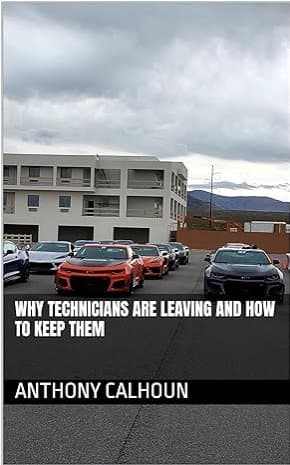
Why Technicians Are Leaving and How to Keep Them
Anthony Calhoun spent 25 years in the bays and behind the service desk. This book breaks down exactly why techs walk - and what shop leaders can do about it. Real stories, real data, no corporate fluff.
Get the book on Amazon →